
Usually when I write about technology, I’m talking about computers.
Cybersecurity.
Windows updates.
Phones acting weird after an update.
Printers summoning demons at 4:55pm on a Friday.
That sort of thing.
But technology doesn’t stop at your laptop anymore.
Modern vehicles are basically rolling computers. They constantly monitor fuel mixture, timing, emissions, idle behavior, airflow, sensors, ignition patterns, fuel trims, and about 700 other things specifically designed to panic the second something changes.
And recently, I heard a mechanic say something that immediately caught my attention:
“We’re getting lots of cars with misfiring engines.”
Now, mechanics hear complaints all day long. So when somebody says something like that with confidence, I tend to listen.
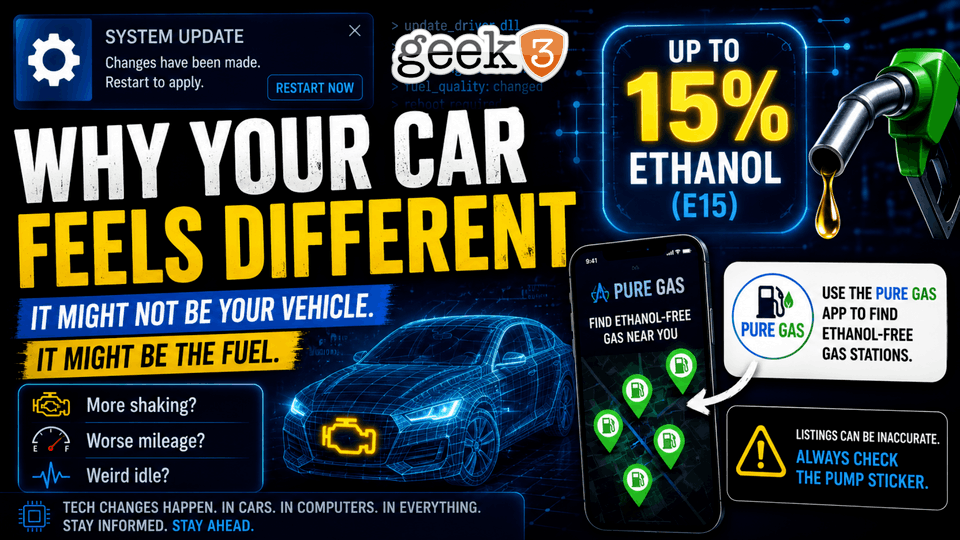
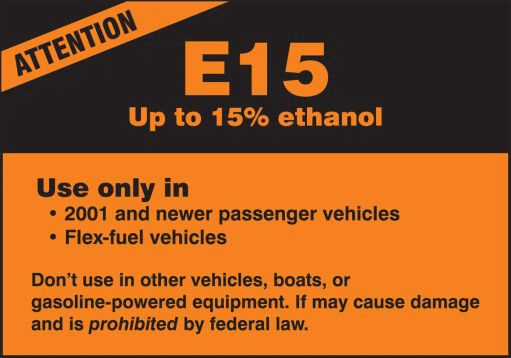
He went on to talk about ethanol in gasoline and how stations have traditionally been allowed to use up to 10% ethanol blends, commonly known as E10 fuel. But now E15 is becoming more common, allowing up to 15% ethanol in the mix.
His description of it was simple:
“It’s like watering down the gas.”
And honestly?
That analogy stuck with me.
According to the EPA, emergency waivers have been used to allow broader summer sales of E15 fuel in an effort to help with fuel supply concerns and high gas prices.
Now before everybody storms into the comments yelling “MY CAR RUNS FINE,” let’s calm down for a second.
This is not the automotive apocalypse.
A lot of newer vehicles can absolutely run E15 without exploding into a Michael Bay movie scene.
But there is a reason people are starting to notice differences.
Because ethanol contains less energy than straight gasoline.
Meaning your engine may burn through it faster.
And that’s where the “watering down” comparison starts making sense to regular people.
The easiest way I can explain it is this:
Imagine ordering orange juice at breakfast… and somebody quietly adds water to it.
Is it still orange juice?
Technically yes.
Does it taste the same?
Not even close.
That’s kind of what higher ethanol fuel can feel like in a vehicle.
Or think about ordering sweet tea at a restaurant and realizing they loaded the cup with so much ice that you basically paid $3.49 for flavored cold water and disappointment.
That’s the vibe.
You still technically got the product.
It just doesn’t feel as potent anymore.
And lately, a lot of drivers seem to be noticing little things.
Maybe the engine shakes a little more at stoplights.
Maybe your fuel economy suddenly feels worse.
Maybe your “miles to empty” estimate now behaves like a Magic 8 Ball.
And honestly, when you think about how modern engines work, it makes sense why even small changes in fuel composition could become noticeable.
Modern vehicles are constantly making tiny adjustments.
Fuel trims.
Air/fuel ratios.
Timing corrections.
Sensor feedback.
Knock detection.
Idle compensation.
Cars today are basically giant rolling science experiments with cup holders.
So when fuel changes even a little?
The vehicle notices.
That’s one reason this topic fascinated me from a technology perspective.
We’re used to software updates changing behavior.
You update your phone and suddenly:
your battery life changes
Bluetooth acts weird
settings move around
notifications stop working
your grandmother accidentally FaceTimes you at 2am
We accept that technology updates can create side effects.
But people rarely think about the fact that fuel changes can create side effects too.
Especially in older vehicles.
And that’s where things get interesting.
Because while many newer vehicles are designed to tolerate E15, older cars and small engines tend to be far more sensitive.
Things like:
lawn equipment
generators
motorcycles
boats
chainsaws
pressure washers
older trucks
classic cars
These systems were often designed around older fuel assumptions.
And ethanol behaves differently than pure gasoline.
It absorbs moisture more easily.
It can break down certain older rubber components over time.
It burns differently.
It stores differently.
That’s one reason small engines tend to hate sitting around with ethanol fuel for long periods.
Anybody who has ever tried starting a lawn mower after winter knows exactly what I’m talking about.
You pull the cord 47 times.
You question your existence.
You threaten violence toward a Briggs & Stratton engine.
And eventually you realize the fuel turned into spicy corn soup sometime around January.
Now again, I want to be careful here because internet conversations around fuel get dramatic very quickly.
I am not saying:
every gas station is secretly ruining fuel
E15 destroys every engine
your car is doomed
civilization is collapsing because of corn
But I am saying there are legitimate reasons why some drivers are noticing changes.
And mechanics are clearly noticing something too.
One important thing people miss is this:
Ethanol may not cause every engine problem… but it can absolutely expose problems faster.
Weak spark plugs.
Dirty injectors.
Failing ignition coils.
Aging fuel pumps.
Old seals.
Carbon buildup.
A car that was already barely hanging on may suddenly start acting moody.
Kind of like how a cheap Wi-Fi router works “fine” until you add three smart TVs, twelve Alexa devices, four security cameras, and a refrigerator that somehow now requires firmware updates.
The underlying weakness was already there.
The new demand just exposed it.
And honestly, that’s probably the best way to think about E15 for most people.
Not as some instant engine killer.
But as something that can magnify existing weaknesses.
That rough idle sitting in the school pickup line?
You may not be imagining it.
That random hesitation when accelerating?
Could be related.
That drop in fuel economy?
Also possible.
Again, not every issue is ethanol-related.
Sometimes people simply need:
spark plugs
fuel injector cleaning
air filters
ignition work
maintenance they’ve ignored since the Obama administration
But fuel changes can absolutely become part of the conversation.
Now here’s where this whole thing gets even more interesting.
There’s actually an app called Pure Gas that helps people locate stations selling ethanol-free gasoline.
And honestly?
It’s kind of fascinating.
The app lets users report stations that offer ethanol-free fuel, often marketed as “pure gas” or recreational fuel.
Now before everybody downloads it immediately, understand this:
The listings are user-generated.
Meaning they can absolutely be outdated or inaccurate.
So always check the actual pump stickers before filling up.
But if you’ve never looked into ethanol-free fuel before, you may be surprised how many stations quietly offer it.
Especially:
marinas
rural stations
stations near lakes
recreational fuel locations
some premium fuel stations
And yes…
It’s usually more expensive.
Because apparently we now live in a world where “100% gasoline” has become the premium luxury version of gasoline.
Which honestly sounds like something out of a dystopian movie.
“Introducing our new premium unleaded. Now featuring actual gasoline.”
But for certain vehicles and equipment, many people swear by ethanol-free fuel.
Especially:
boats
motorcycles
generators
lawn equipment
classic vehicles
backup emergency equipment
And honestly, the logic makes sense.
Less blended fuel.
More energy density.
Fewer storage issues.
Fewer variables.
Some people even report smoother idle and slightly improved mileage depending on the vehicle.
Now whether that benefit outweighs the increased price at the pump is going to depend heavily on the vehicle and how you use it.
For a lawn mower that sits half the year?
Probably worth considering.
For a daily commuter?
That becomes more debatable financially.
But regardless of where you land on it, I think this whole topic is interesting because it perfectly mirrors what we see constantly in technology.
Small background changes create noticeable real-world behavior changes.
And most people notice the symptoms before they understand the cause.
That’s true in:
cybersecurity
operating systems
cloud software
internet service
smartphones
vehicles
fuel systems
Something changes quietly behind the scenes…
And regular people suddenly start saying:
“Why does this thing suddenly feel weird?”
That’s basically the entire IT industry in one sentence.
And honestly, it’s why this whole ethanol discussion caught my attention in the first place.
Because whether it’s:
a Windows update
a fuel blend change
a cloud migration
an iPhone setting
or a car suddenly idling rough
The pattern is always the same.
Systems evolve.
People notice side effects.
And somebody eventually has to explain what changed.
That’s what we do every day for businesses.
We help companies navigate technology changes before those changes become expensive headaches.
Cybersecurity.
Networks.
Cloud systems.
Performance issues.
Infrastructure upgrades.
Weird problems nobody else can explain.
That’s our world.
So if your business has technology that suddenly “started acting weird,” or you want somebody proactive watching over your systems before small problems become major ones, shoot me a message.
And if your lawn mower suddenly starts running rough after sitting all winter…
Well…
Maybe check the fuel too.
